


Why Choose SLA 3D Printing for the Four Categories of Vehicle R&D Prototyping?
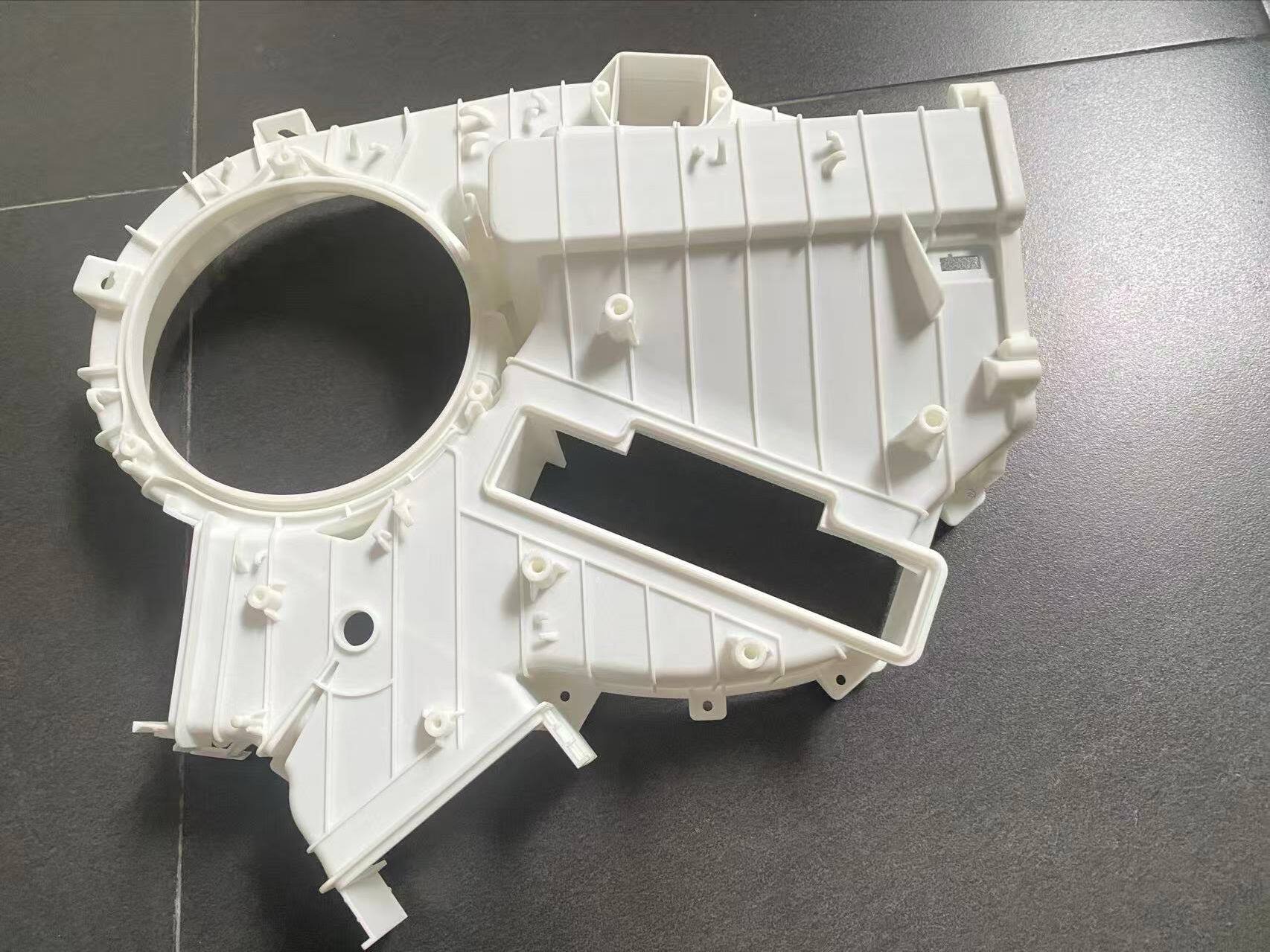
As the demand for prototype parts in vehicle R&D accelerates, leading automakers are turning to industrial-grade SLA resin 3D printing. With rapid iterations, small batch sizes, and diverse part types, a single machine must cover all three dimensions: build volume, accuracy, and material compatibility. This article breaks down the four most common part categories in R&D prototyping and explains how to configure the right equipment for each.
R&D prototyping and mass production outsourcing are two different things. Its characteristics are clear:
Frequent updatesIt's common for a single part to go through 2–3 revision cycles per week. Designers may adjust snap-fit locations today, then need physical prototypes for verification tomorrow.
Small batchUsually, only a few units—or even just one—are needed for assembly verification or review demonstrations.
Wide varietyWithin the same project, we mold interior panels today, tubing fittings tomorrow, and transparent viewing windows the day after. Part sizes and performance requirements vary significantly.
High confidentiality requiredDigital models of unreleased vehicles cannot be shared externally. This is a key reason why many OEMs prefer to invest in their own equipment rather than outsource the work.
These four factors define the selection criteria: not a machine dedicated to a single part type, but one capable of handling most parts with low changeover and material costs, and ensuring long-term stable operation.
Category 1: Interior and Exterior Prototypes
Interior and exterior prototypes are the most numerous in R&D prototyping, used for styling reviews, human-machine interface validation, and assembly interference checks.
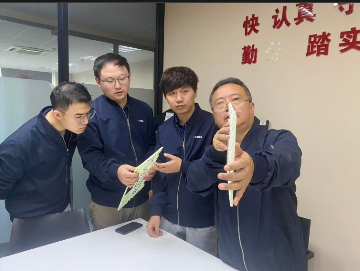
The team is testing the precision of automotive resin parts.
The core requirements for this type of part are surface quality and dimensional accuracy. Review parts must be paintable and texture-ready; assembly parts must fit precisely. SLA's advantage in both areas stems from its forming principle: the laser spot size remains constant regardless of build area. Whether the build area reaches 600 mm, detail fidelity does not degrade.
Large components, such as instrument cluster assemblies and door panel assemblies, require large build volumes. The Shuzao Technology 3DSL-600 Industrial SLA Resin 3D Printer features an XY build area of 600 x 600 mm and a Z-axis height of 400 mm (customizable from 100 to 400 mm). It produces entire parts in a single print without segmentation or assembly.
Small parts demand precision. The device features interchangeable small resin tanks and build platforms, allowing you to print small items without consuming a full tank of resin.
Second category: Functional validation samples
Functional prototype samples are used for testing. This category includes air ducts, piping, clips, brackets, and housings.
The challenge with these parts lies in inconsistent performance requirements: some need heat resistance, others require flexibility, some must be transparent for internal inspection, and others must withstand repeated assembly and disassembly without failure.
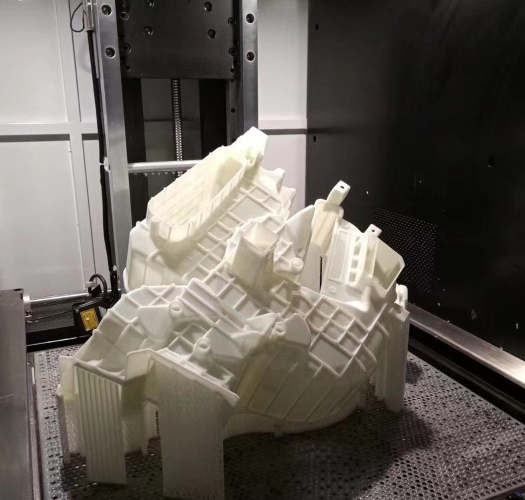
The solution lies not in the device, but in the material system. Shuzao Technology's self-developed SZUV series photopolymers cover a wide range of operating conditions. Paired with the push-pull quick-change resin tray of 3DSL-600, you can switch materials without changing the equipment.
Temperature Resistance: Low-shrinkage formulation designed for hot air testing components and high-temperature housing parts.
Toughness Requirements: Tough formulas are suitable for snap-fit enclosures and parts requiring repeated assembly/disassembly. For smaller precision assemblies, use a formula with even higher toughness performance.
High-transparency clear formulation for flow visualization models and transparent observation windows.
Balanced formula combining rigidity, flexibility, and heat resistance for most functional prototypes and precision assemblies.
One set of materials per device is more cost-effective than distributing materials across multiple devices, reducing both footprint and labor requirements.
Category 3: Assembly Fixtures and Tooling
Fixtures and tooling are often underestimated. Though they don't appear in review meetings, they directly impact assembly line efficiency.
Speed is key for this type of part. After a design change, fixtures must be updated. Outsourcing fixture modification takes about a week per iteration. With in-house industrial SLA printers, you can print the updated CAD model the same day and install it on the line by the next day.
For accuracy, gauges focus on dimensional consistency of locating holes, locating surfaces, and datums. The 3DSL-600 offers a repeatability accuracy of ±0.01 mm. Forming accuracy is within ±100 to ±0.1 mm; beyond 100 mm, it is calculated as ±0.1% × L. Before manufacturing the gauge, clearly define tolerance requirements for critical dimensions so engineers can determine whether printed parts are ready for use or require machining allowances.
Material-wise, fixtures typically use rigid formulations to ensure they remain deformation-free during use.
Category 4: Pneumatic and Wind Tunnel Specimens
Wind tunnel scale models, aerodynamic components, and flow visualization parts fall into this category. They demand higher surface continuity and heat resistance than the first three types. As covered in a dedicated section earlier, success for these parts hinges not on the printing process itself, but on whether the build volume allows single-piece fabrication and whether the material resists deformation under high-temperature airflow conditions.
How should you set up this 3D printer? Four engineering details matter more than the spec sheet.
Anyone can check what's in the spec sheet. What truly determines long-term usability is the following:
1: Digital Intelligent Spot DimmingUse large spot for fast bulk filling and small spot for contours and fine details to preserve precision. The 3DSL-600 switches spot diameter between 0.1 and 0.5 mm, enabling coarse and fine scanning on the same part in separate zones.
2 Resin tank level control with lift mechanismLarge-format prints can take dozens of hours; stable resin levels ensure consistent part quality. Precise, constant level control extends print endurance for long sessions. Combined with a peak build rate of 400 g/hr, large models can be printed in a single run without breaks.
3, nested size slotsUpgrading large-format equipment with small resin tanks and build platforms enables rapid prototyping of new materials without draining the entire resin tank for each formula trial. R&D teams use this feature frequently.
4 - Quick resin tank replacementPush-pull design enables one machine to handle multiple materials, eliminating the need for separate machines per part type. For R&D prototyping scenarios with diverse part varieties, this capability delivers greater value than efficiency metrics alone.
How does the process flow from CAD model to prototype?
Step 1: Export the 3D model. SLA devices support SLC and STL formats, which are natively exported by all major modeling software.
Step 2: Manufacturability Assessment. Orientation, support strategy, wall thickness, and critical tolerances determine part success rate and post-processing effort. For complex parts, submit the model to an engineer in advance.
Step 3: Printing. Select material and layer thickness based on part dimensions and performance requirements. The coating thickness for 3DSL-600 is adaptive between 0.03 and 0.25 mm; use thinner layers for precision parts and thicker layers for rapid prototypes.
Step 4: Post-processing. Clean, remove supports, perform secondary curing, and sand as needed; apply spray coating if required. Use an ultrasonic cleaner for large parts and a constant-temperature UV post-curing oven to ensure uniform curing and minimize deformation.
Step 5: Inspection and assembly validation. Verify critical dimensions, perform actual assembly installation, revise the digital model if issues are found, then proceed to the next iteration.
Once this process is mastered, the redesign cycle will be limited by the design team rather than the prototype production team.
Frequently Asked Questions: 3D Printing in Vehicle Prototyping
R&D Prototyping: Buy equipment or outsource?
Answer: Consider two factors: first, confidentiality requirements—digital models of unreleased vehicles should not be shared externally; second, revision frequency. For projects undergoing two to three revisions per week, outsourcing involves high communication costs and long wait times. If either factor applies, building in-house capacity is the more reasonable choice.
Can one device cover interior, exterior, and functional components?
Yes, provided the build volume and material system are sufficient. Select the size tier based on the maximum part dimensions with a margin for error, and switch materials using the quick-swap resin tank. The 3DSL series offers six continuous tiers ranging from 100 mm to 1600 mm, allowing process parameters validated on smaller machines to be directly applied to larger ones without starting from scratch.
Can printed documents be loaded directly for road testing?
Answer: It depends on the location and operating conditions. These methods work for visual inspections, assembly verification, and static gauging. For areas subject to stress or heat, follow the engineer's assessment; consider switching to engineering materials and processes with appropriate performance if necessary.
Is changing materials difficult?
Answer: The push-pull resin tank design enables rapid material changes. Tank swapping, cleaning, refilling, and loading the corresponding process parameters are all standard operations within acceptable ranges, eliminating the need for dedicated changeover downtime.
Does the device require dedicated supervision?
Answer: Long-term printing does not require constant manual supervision; the key is level control and automated dosing. Routine tasks include periodic inspections and consumable replenishment, performed according to an annual preventive maintenance plan.
Manufacturer Background and Basis for Stereolithography (SLA) 3D Printing Technology:
Shanghai Shuzao Electromechanical Technology Co., Ltd. was founded in 2004 and has specialized in SLA 3D printing technology for 22 years. Led by Dr. Zhao Yi, a renowned domestic expert in SLA technology, the core R&D team operates from facilities exceeding 2000 square meters. We have delivered equipment and services to Tesla, SAIC-GM, China Automotive Engineering Research Institute (CAERI), JAC Motors, Chery Automobile, and major mainstream automotive parts manufacturers, serving over 10000 customers. The company is a National High-Tech Enterprise, a Shanghai "Specialized and New" Enterprise, and holds ISO9001 quality management system certification.
Dr. Zhao Yi, founder of the company, is a Ph.D. graduate from Xi'an Jiaotong University. In 1994, he joined the research team led by Academician Lu Bingheng of the Chinese Academy of Engineering to focus on photopolymer resin technology. During the 1990s, he spearheaded the domestic development of SLA laser curing resin machines and was awarded the Second Prize of the National Science and Technology Progress Award (Certificate No. J-216-2-08-R07).
Third-party verification of device accuracy: The 3DSL series was submitted to the National Additive Manufacturing Product Quality Inspection and Testing Center (Jiangsu) in 2018 5. Precision testing was conducted in accordance with mechanical industry standard JB/T 10626-2006. All inspection items passed. Report number: 2018PZWA00036, which is verifiable.
All equipment, software, and materials are developed and manufactured in-house. Core components are fully controllable, with direct technical support and after-sales service from the original manufacturer. For specific part evaluation, please send 3D models to our engineers for manufacturability analysis.Official Websitewww.digitalmanu.com, phone 400-690-8069.
Related Articles
What materials can be used for ceramic 3D printing?
3D-Printed Ceramic Robotic Arm: A Breakthrough in Chip Manufacturing
<p>On semiconductor production lines, silicon wafers must be transferred between dozens of processes including lithography, etching, and deposition. Ceramic mechanical fingers are specialized grippers mounted at the end of robotic arms to handle silicon wafers, providing a contamination-free gripping solution.</p> <h3>Why Ceramic?</h3> <p>There are three key reasons:</p> <p><strong>① Zero Contamination</strong>: Ceramic surfaces resist particle shedding, preventing microscopic debris that could scratch wafers or disrupt processes. Metal fingers are a "disaster" in cleanrooms.</p> <p><stron...